EVA SUZANNA GASPAR
Somatic Practitioner and Psychologist
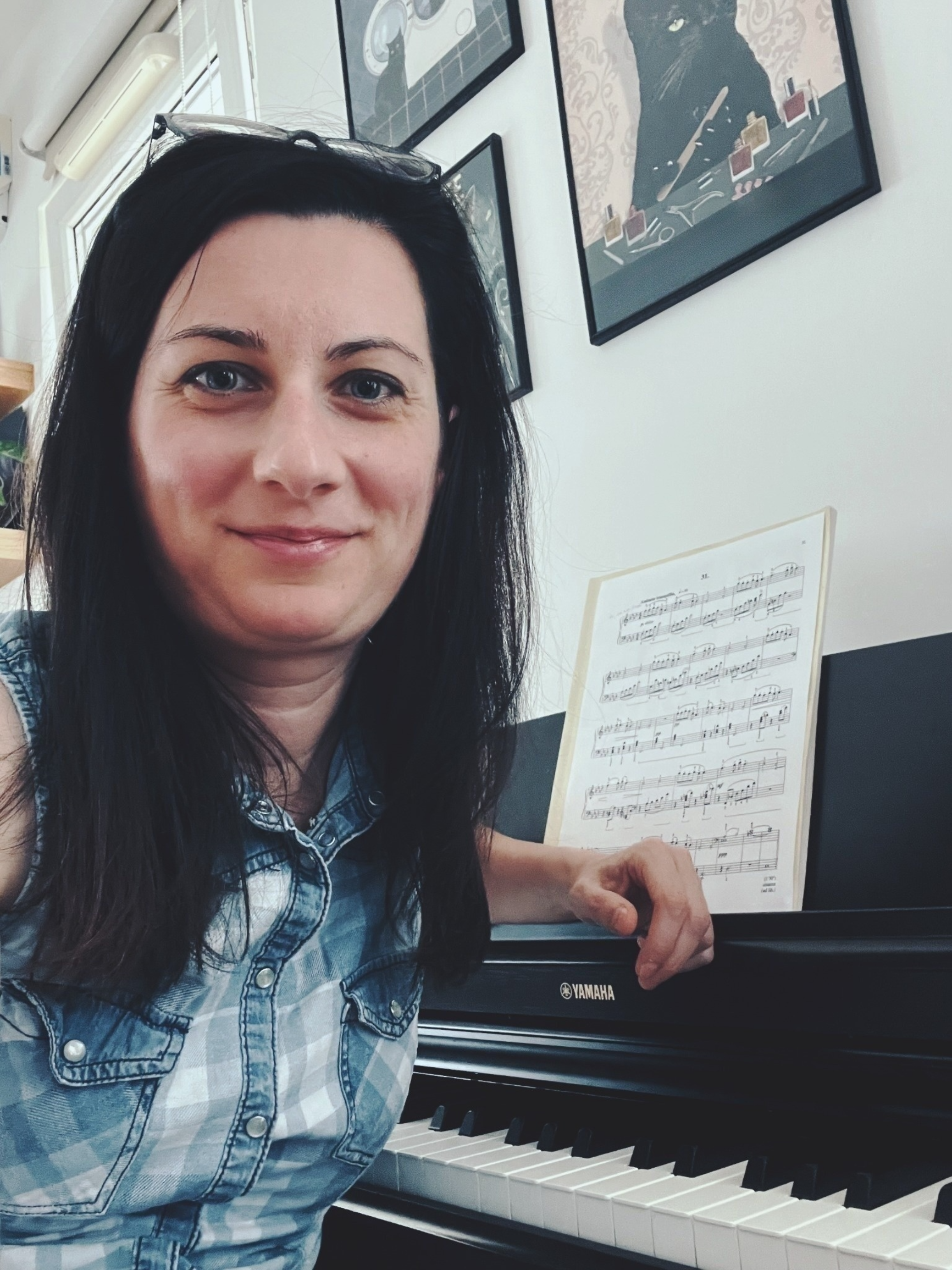
ABOUT MY BACKGROUND
I’ve always been interested in the question of how people function — not just as individuals, but within the larger social and cultural systems that shape us. This interest led me to study psychology, where I could explore human behavior from both personal and collective perspectives.
Over the years, I worked as a counselling psychologist in various settings, including education, health care, social services and public service and defense-related institutions. Along the way, I explored a range of approaches — from cognitive-behavioral therapy, acceptance and commitment therapy and humanistic approaches to relaxation techniques and altered-state-based methods.
In earlier years, I was especially drawn to topics like nutritional psychology, ecopsychology, social- and political psychology — areas that still feel close to my heart.
I think and work from a critical psychology perspective, which means I take into account not only individual experiences, but also the wider social environment in which psychological challenges arise. This foundation continues to shape how I see human experience today — as something deeply personal, yet always connected to our wider context.
MY JOURNEY TO SOMATICS
In 2023, I came across the work of Peter Levine and Somatic Experiencing — a turning point that completely reshaped how I understand healing, well-being, and resilience. Later on, I began exploring other somatic methods, practicing TRE (Tension & Trauma Releasing Exercises), and learning additional body-based techniques for nervous system regulation. These gave me firsthand experience of how simple somatic tools — not just therapeutic interventions — can offer real support for regulation, relief and a deeper sense of connection to ourselves.
All of these experiences had such a significant impact that I went on to study with organizations like NICABM, the Trauma Research Foundation, the Polyvagal Institute and The Embody Lab. Learning from pioneers in the field was both inspiring and transformative.
Throughout my professional and personal life, I often saw how talk-based therapies can lead to insight but not always to change. I kept meeting people who had already talked things through, explored their past and gained awareness of their struggles — yet still felt stuck and unable to shift it. I also met others who weren’t necessarily looking for therapy, but rather practical tools they could use in everyday moments of stress or anxiety — tangible ways to shift what was happening, not just understand it.
That’s where somatic approaches came in for me. They offered a way to bridge the gap between understanding and real change — turning awareness into embodied transformation.
HOW I WORK TODAY
When I experienced for myself how powerful simple somatic techniques can be, I chose to focus on studying and sharing them — and quickly saw how much potential they hold for people living with the ongoing effects of anxiety and stress. I see somatic tools as accessible, self-directed practices that, when taught with care and offered in a safe, supportive space, can meet stress where it actually happens— in the body.
I don’t offer counselling or therapy. Instead, I guide people in learning and practicing somatic tools — practices that support nervous system regulation and help shift stressful and anxious states and reduce their impact. These “micro-resets” are accessible, sustainable exercises that everyone can learn — and help develop self-regulation skills over time.
This approach isn’t better or more “right” than therapy — it simply serves a different purpose. In many cases, therapy is essential, and for some, other methods can be exactly what they need. For others, this kind of support can be the missing piece — a way to build real-time resilience.
WHAT I BELIEVE ABOUT SUPPORT AND CHANGE
My way of working has been shaped just as much by what didn’t help me as by what did. Over the years, through my own therapeutic and personal process, I’ve had deeply valuable experiences — and I’ve also known what it’s like to feel misread or guided away from my internal signals.
These experiences taught me something essential: that real support doesn’t override what someone feels, but helps them reconnect with their own perceptions, needs and signals. Meaningful change often begins when we feel safe enough to notice what’s happening inside and to trust what we find there. What supports one person may not work for another. That’s why I don’t believe in fixing, forcing or directing. There’s no one-size-fits-all method and no tool that works without trust, attunement and genuine respect for someone’s inner experience.
A LITTLE MORE ABOUT ME
-THE PART WHERE THE CAT STEALS THE SHOW
After several years of living across Europe, I currently live in Budapest with my husband and our cat, Charlie.
At one point, I was genuinely interested in training her as a therapy cat and even started a cat-assisted therapy course. Unfortunately, Charlie didn’t meet a single requirement. Not one. So, that dream was short-lived.
On the bright side, living with her has been an excellent crash course in nervous system regulation. She’s the embodiment of rest, presence and healthy boundaries — when she’s not plotting world domination from the windowsill.

-
Psychologist MA - Educational and Counseling Psychology
Eötvös Loránd University, 2013Psychologist BA
Károli Gáspár University, 2010 -
Somatic Embodiment & Regulation
Dr. Linda Thai, ongoing
Vagus Nerve Stimulation: Natural Neural Exercises to Enhance Emotional & Physical Health
Polyvagal Institute (Dr. Arielle Schwartz), 2025
Somatic Anxiety Therapy
Embody Lab, 2025
Traumatic Stress Studies
Trauma Research Foundation (Dr. Bessel van der Kolk), 2024
Nutritional and Integrative Medicine for Mental Health Professionals
Dr. Leslie Korn, 2024
Ericksonian Hypnosis
Hungarian Association of Complex Psychotherapy, 2019
Cognitive Behavioural Therapy
Hungarian Association for Behavioural, Cognitive and Schema Therapies, 2018
Autogenic Training
Hungarian Association of Relaxation and Symboltherapy, 2016 -
Somatic Hacks for Calming the Nervous System
Dr. Linda Thai, 2025
TRE (Tension & Trauma Releasing Exercises), Introductory Workshop
TRE Hungary, 2025
Expert Strategies for Working with Anxiety
National Institute for the Clinical Application of Behavioral Medicine, 2024
Feline-Assisted Therapy
Foundation for Therapy and Assistance Cats (Noemi Banszky), 2021
Positive Discipline
Positive Discipline Hungary, 2018
ADHD: Everyday Strategies for Elementary Students
University at Buffalo, 2016
Autism Spectrum Disorder
University of California, 2016
Effective Strategies for Managing Childhood Behavioral Issues
Vadaskert Foundation for Mental Health of Children, 2015